
Water Hyacinth Removal in California: Why It Spreads So Fast and How to Stop It
Mar 10, 2026
There's a plant in California's waterways that can double its coverage in two weeks, weigh up to 200 tons per acre, and produce seeds that remain viable in the sediment for more than five years. It arrived as a pretty ornamental flower, sold at garden shops and placed in decorative ponds across the country. Today, it's one of the most costly, persistent, and ecologically damaging invasive species in the state — and California has been fighting it in the Sacramento-San Joaquin Delta since 1983.
That plant is water hyacinth (Eichhornia crassipes), and if it has found its way into your lake, pond, or waterway, you need to understand exactly what you're dealing with before you can stop it.
A Plant Built to Spread
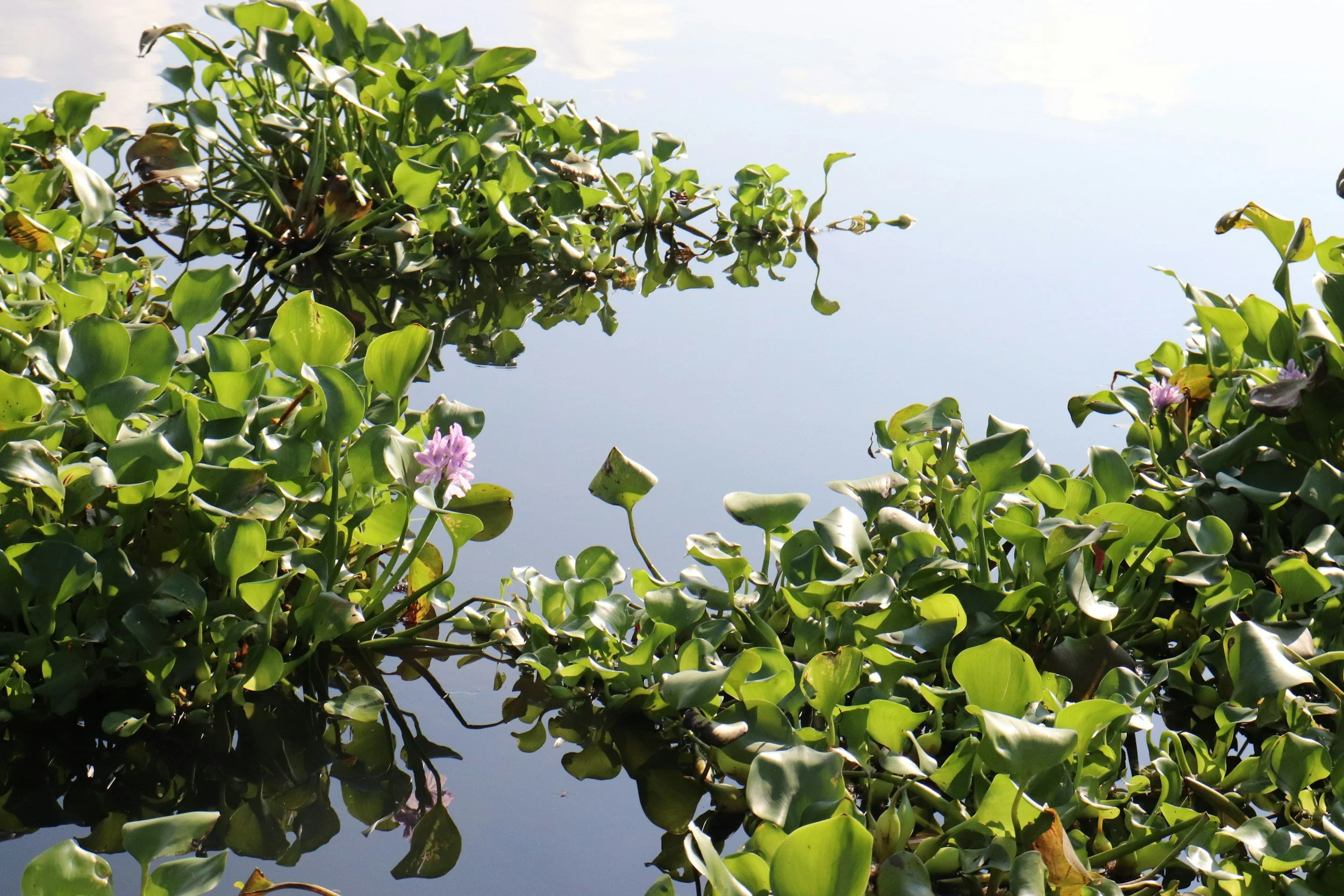
Water hyacinth is native to South America, where natural enemies and ecological checks keep it in balance within its native range. When it arrived in the United States — first displayed at a New Orleans exposition in 1884 and then distributed widely as a free ornamental gift — it entered a world with no natural predators and no ecological competition prepared to match its growth rate.
By 1904, it was already established in California waterways. Over a century of management efforts, including herbicide campaigns, mechanical harvesting operations, and biological control programs, have not eradicated it from the state. The California Department of Food and Agriculture now rates it as a widespread "C"-rated pest — meaning complete eradication is no longer considered a realistic goal. The objective has shifted to management and containment.
Understanding why water hyacinth is so difficult to control starts with understanding its reproductive biology.
Three Ways Water Hyacinth Spreads (and Why Each Is a Problem)
1. Vegetative Propagation via Stolons
The primary and fastest way water hyacinth spreads is through horizontal stems called stolons that continuously produce new daughter plants. A single healthy water hyacinth plant will produce multiple daughter plants simultaneously — each of which will begin producing their own daughter plants within weeks. Under ideal warm-water conditions, this exponential growth allows a water hyacinth colony to double the area it covers in as little as two weeks.
This is not a hypothetical worst case. U.S. Fish and Wildlife Service biologists working in the Delta have documented water hyacinth covering the entirety of a creek in a single growing season, with no water surface visible. Some infestations in warmer climates have grown mats thick enough to walk across.
2. Fragmentation
Every piece of water hyacinth that breaks off — from a boat propeller, from physical removal without complete containment, from storm surges — is a potential new plant. Fragments don't need to root to survive; they float, continue growing, and establish new colonies wherever they land in suitable habitat.
This fragmentation risk is one of the core reasons why improper removal attempts can actively worsen a water hyacinth infestation. Running a boat through a mat, or attempting physical removal without a containment plan, can scatter viable fragments across a water body and create dozens of new infestation points.
3. Seed Production and Dormancy
Each water hyacinth plant can produce up to 3,000 seeds. Once released, these seeds sink to the bottom of the waterway and can remain viable for 5 years or more. This means that even when a surface infestation is completely cleared, the seed bank in the sediment below represents a persistent threat of re-establishment if conditions favor germination.
This seed bank is one of the key reasons why managing water hyacinth in California requires a multi-year commitment rather than a one-time removal effort.
What Water Hyacinth Does to a Lake
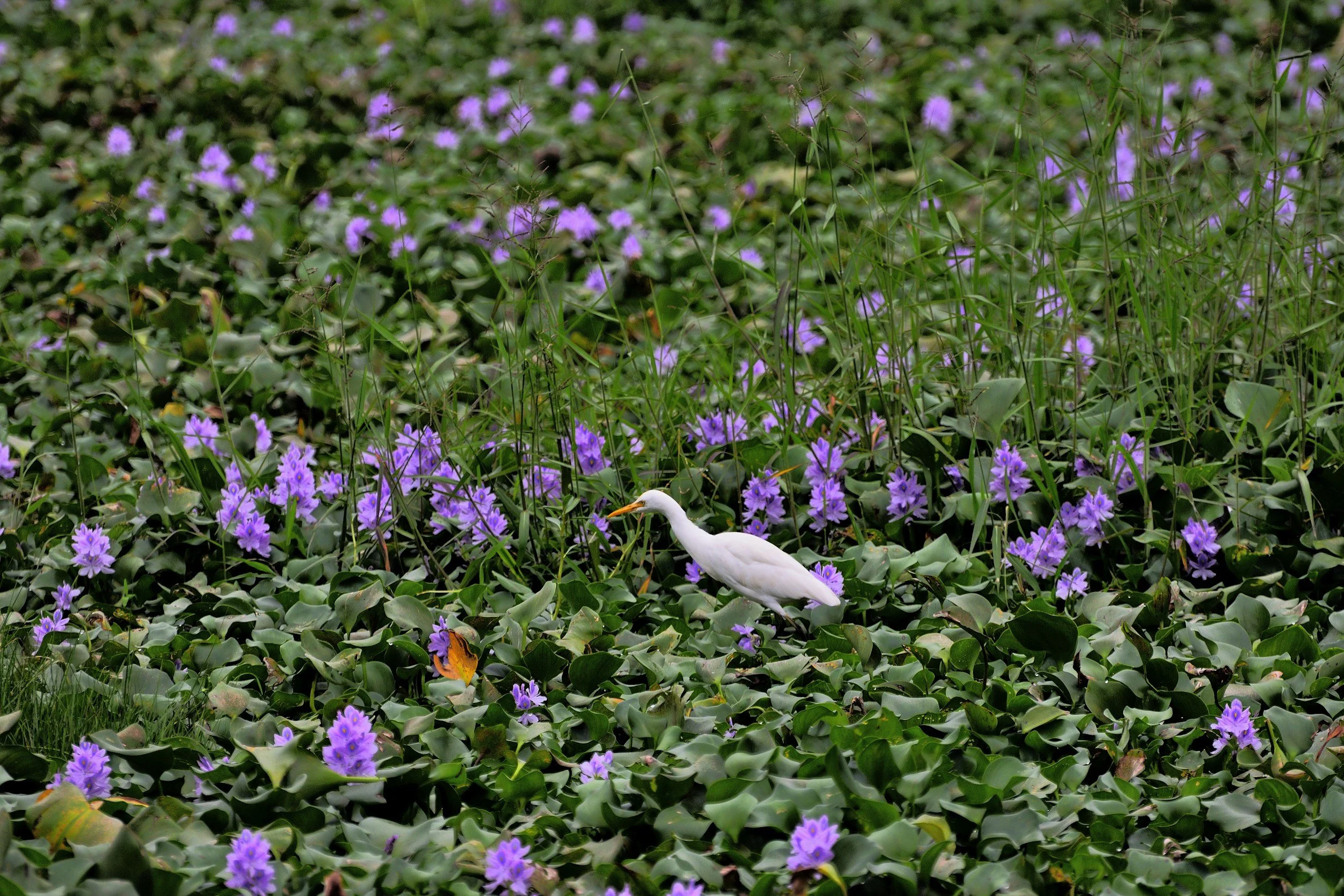
The ecological and economic damage caused by water hyacinth infestations is comprehensive.
Light blockage: Dense floating mats block sunlight from penetrating the water column, killing submerged native vegetation and disrupting the aquatic food web at its foundation.
Oxygen depletion: As blocked sunlight reduces photosynthesis by submerged plants and algae, dissolved oxygen in the water drops — suffocating fish, invertebrates, and other aquatic life.
Mosquito habitat: The warm, still, protected water beneath water hyacinth mats creates ideal mosquito breeding conditions. Public health agencies in affected areas regularly identify water hyacinth infestations as significant contributors to mosquito population increases.
Navigation and access blockage: Mats thick enough to obstruct boat traffic are common in heavily infested areas of the Delta. Marinas, boat ramps, and recreational water access points have been closed or significantly impaired by water hyacinth coverage.
Economic damage: Water delivery systems, irrigation pump intakes, and hydropower infrastructure are all vulnerable to obstruction by floating mats of water hyacinth. The state of California has spent millions of dollars annually managing this single species in the Delta alone.
Displacement of native species: Water hyacinth creates conditions — darkness, low oxygen, warm stagnant water — that favor its own continued growth while suppressing the native aquatic plant communities that would otherwise compete with it.
California's Water Hyacinth Management Program
In 1983, the California legislature formally designated the Division of Boating and Waterways (DBW) as the lead agency for controlling water hyacinth in the Sacramento-San Joaquin Delta. This was not a temporary response to an emerging problem — it was an acknowledgment that water hyacinth had become a permanent fixture requiring institutional management.
Today, DBW's Floating Aquatic Vegetation (FAV) Control Program manages water hyacinth alongside several other invasive floating plants using an Integrated Pest Management (IPM) approach:
Herbicide treatment with aquatic-approved chemicals during the growing season
Mechanical harvesting vessels deployed in areas of heavy infestation where herbicide is less effective
Hand-picking for smaller mats or areas where chemical and mechanical methods are restricted
Biological control using water hyacinth weevils (Neochetina bruchi and N. eichhorniae) — insects that feed on the plant and introduce secondary pathogens that reduce vegetative reproduction
Despite decades of this sustained, multi-method effort, water hyacinth continues to require active annual management throughout the Delta and is actively spreading into other California waterways outside the Delta system.
Removing Water Hyacinth From Your Lake or Pond
If water hyacinth has appeared in your lake, HOA pond, agricultural water storage, or any private waterway, the most important principle is: act immediately and act correctly. Every day of delay is another day of exponential growth. And every incorrect removal attempt risks spreading the infestation further.
For Small, New Infestations
If water hyacinth is caught early — a few plants or a small mat in an accessible location — manual removal can be effective. The protocol:
Hand-pull the entire plant, including all root material and every plant fragment
Do not shake plants over the water — fragments that fall back in will re-establish
Place all material immediately into thick contractor bags
Do not compost — water hyacinth will continue growing and re-establish from compost piles
Dispose of bagged material in municipal waste
Monitor the removal area closely for regrowth from seed germination
For Established Infestations
Once water hyacinth has established a significant mat — covering even a fraction of a small lake or pond — manual removal becomes impractical and the risk of spreading fragments makes DIY attempts counterproductive. Professional intervention is essential.
Mechanical harvesting by a professional aquatic management company using specialized harvest vessels is the most effective approach for established infestations. These vessels are designed to:
Cut and collect floating vegetation with controlled cutting mechanisms
Contain cut material onboard to prevent fragment spread
Offload collected biomass completely at shore transfer sites
Leave the water body clear without leaving floating fragments behind
This is exactly the approach California State Parks' Division of Boating and Waterways employs in the Delta — mechanical harvesting in heavily infested areas where herbicide is less effective or restricted.
Herbicide treatment using aquatic-approved products, applied by a licensed professional, can supplement mechanical removal — particularly for treating regrowth from seed germination after initial mechanical clearing.
What to Avoid
Running boat motors through water hyacinth mats (creates fragments)
Cutting plants at the water surface without removing material (plants will regrow from roots)
Attempting mechanical removal without containment measures in connected waterways
Using standard lawn or garden composting for removed material
Preventing the Spread of Water Hyacinth
If your property is currently free of water hyacinth, these practices help protect it:
Never plant water hyacinth. Its sale and distribution are illegal in California, but plants are still occasionally available online from out-of-state sources. Do not purchase or cultivate it for ornamental use.
Clean, Drain, Dry your watercraft. Water hyacinth fragments can hitch a ride on boats, trailers, and equipment. Inspect and clean all watercraft and equipment after use in any infested water body.
Maintain good water quality. Water hyacinth thrives in warm, nutrient-rich water. Lakes and ponds with controlled nutrient levels, good circulation, and active management are more resistant to water hyacinth establishment.
Professional Water Hyacinth Removal in California
Aquatic Harvesting provides professional water hyacinth removal services throughout California — from the Sacramento-San Joaquin Delta to agricultural waterways in the Central Valley, suburban HOA lakes throughout the Bay Area and Southern California, and private ponds and reservoirs statewide.
We use professional-grade aquatic harvest vessels and Aquatic Vegetation Cutter (AVC) equipment capable of complete biomass removal in both large and confined water bodies. Our crews understand California's regulatory requirements, including notification protocols for working in or near sensitive habitat areas.
Don't wait for a small water hyacinth problem to become a water body-wide crisis.
