
How to Get Rid of Algae in California Lakes Without Chemicals (2026 Update)
Jan 30, 2026
When a California lake turns green, the first instinct for many property owners and managers is to reach for an algaecide. And while chemical treatments certainly have their place in a comprehensive management plan, they're not always the right first move. For many lakes, ongoing chemical dependency creates more problems than it solves.
In this guide, we explore the full range of non-chemical approaches to algae control in California lakes and ponds. These methods are effective, environmentally responsible, and increasingly the preferred approach for HOA communities, municipalities, golf courses, and private landowners who want long-term results without the restrictions that come with chemical applications.
Why Go Chemical-Free? Understanding the Tradeoffs
Before diving into solutions, it's worth understanding why many California lake managers are moving away from chemical-only approaches—or at least reducing their reliance on them.
Water use restrictions. Most aquatic algaecides require a waiting period before the treated water can be used for irrigation, swimming, or livestock watering. In drought-stressed California, where every drop of water matters, multi-day or multi-week use restrictions can be a serious operational burden.
Regulatory complexity. Applying chemicals to California waterways requires permits and licensed professionals, and the regulatory framework grows more complex each year as the state strengthens water quality protections. Not all chemicals approved at the federal level are approved for all California waterways.
Nutrient recycling. When algaecides kill an algae bloom, the dead biomass sinks to the bottom and decomposes—releasing the same phosphorus and nitrogen that fueled the bloom back into the water column. Without removing the biomass, you're essentially feeding the next bloom.
Ecosystem impacts. Even EPA-approved aquatic chemicals can affect non-target species, alter the microbial balance of a lake's ecosystem, and reduce the native plant and invertebrate populations that help regulate algae naturally over the long term.
None of this means chemicals should be off the table, but it does explain why chemical-free and chemical-reduced approaches are worth serious consideration.
Method 1: Mechanical Algae Harvesting
Mechanical harvesting is the most direct chemical-free approach to algae control. Using specialized floating harvest equipment, professional crews physically remove algae from the water surface and haul it off-site.
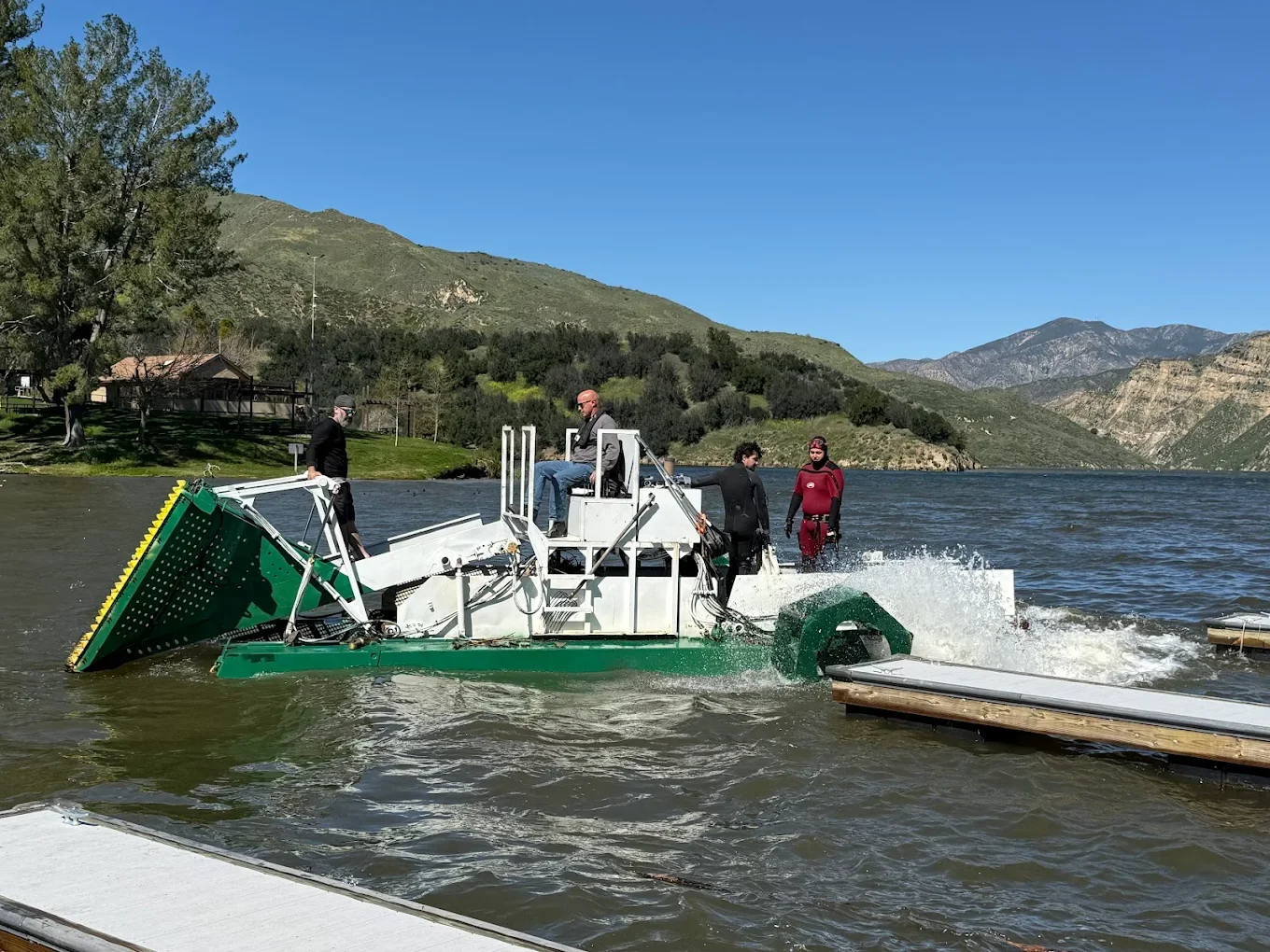
Aquatic Harvesting’s Mechanical Weed Harvester in Action
How It Works
Aquatic harvest boats are equipped with cutting and collection mechanisms that skim filamentous algae mats and surface scum from the water. The collected material is conveyed aboard the vessel and later deposited onshore to dewater before disposal. Unlike chemical treatments, mechanical harvesting physically removes the algae, and the nutrients locked inside it, from the water body entirely.
This is a critical distinction. Phosphorus and nitrogen that leave the lake in a load of harvested algae are nutrients that can no longer fuel the next bloom cycle.
Best Applications
Mechanical harvesting is most effective for:
Dense surface mats of filamentous (string-like) algae
Floating cyanobacteria accumulations in calm, accessible waters
Community lakes, HOA ponds, and municipal water bodies where water use restrictions from chemicals would be disruptive
Golf course water hazards and corporate campus water features where aesthetics are important
Limitations to Know
Mechanical removal addresses existing blooms but doesn't directly eliminate the nutrient conditions that caused them. It's most powerful when combined with other strategies on this list.
Method 2: Aeration and Circulation Systems
If mechanical harvesting treats the symptom, aeration treats the disease. Most algae blooms are fundamentally the result of stagnant, warm, nutrient-rich water and aeration systems disrupt all three of those conditions simultaneously.
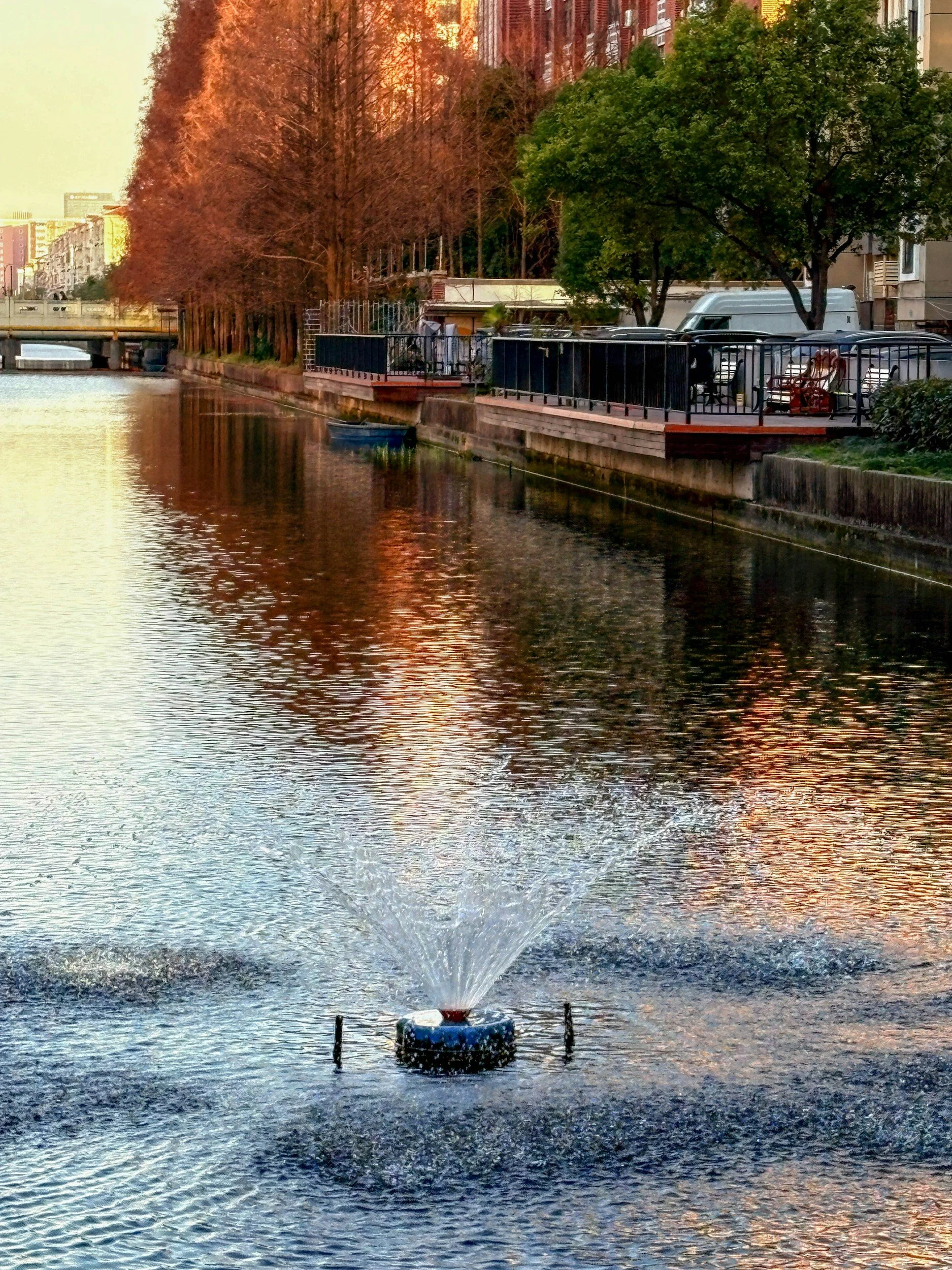
Subsurface Aeration
Bottom-mounted diffuser systems pump compressed air through tubing to release fine bubbles at the lake floor. As bubbles rise, they create a continuous vertical circulation pattern that:
Destratifies the water column, preventing the warm surface layer that algae prefer from developing and persisting
Increases dissolved oxygen throughout the lake, suppressing the anaerobic conditions in bottom sediment that trigger phosphorus release—a phenomenon called internal nutrient loading
Supports aerobic bacteria that break down organic matter more completely and keep nutrients locked in bottom sediment rather than cycling back into the water column
In aerated lakes, bloom frequency, intensity, and duration are measurably reduced—even without any chemical intervention.
Surface Fountains and Aerators
Floating fountains and surface aerators are less powerful than subsurface systems for stratification control, but they add oxygen, increase surface turbulence that disrupts algae mat formation, and provide significant visual appeal for community lakes and corporate campuses. They're also a meaningful deterrent to geese, which prefer still water.
Method 3: Beneficial Bacteria and Enzyme Treatments
This one sits in a gray zone: it involves adding something to the water, but beneficial bacteria products are not classified as chemicals or pesticides. They're biological amendments that accelerate natural nutrient cycling in ways that starve algae over time.
How It Works
Beneficial bacteria products contain concentrated strains of naturally occurring microbes that aggressively consume dissolved organic matter, phosphorus, and nitrogen. Applied regularly, they help establish a more balanced lake microbiome that competes with cyanobacteria for available nutrients.
These products are safe for fish, wildlife, pets, and humans, have no water-use restrictions, and don't require special permits. They're widely used in HOA ponds, golf course water features, and smaller lake systems in California.
Realistic Expectations
Bacterial treatments work over weeks and months, not hours. They're a foundation for prevention, not a rapid response to an active bloom. Used consistently as part of an annual maintenance program, they can significantly reduce chemical treatment needs.
Method 4: Pond Dye
Aquatic lake dye is a simple, low-cost, and completely chemical-free tool that reduces algae growth by blocking the sunlight that algae need to photosynthesize.
Blue or black dye applied to the water column creates a light-filtering effect that limits photosynthesis in deeper water, reducing algae and submerged plant growth below the surface. It doesn't kill anything, it simply removes a key ingredient algae need to thrive.
Dye is safe, temporary (it biodegrades over weeks), visually appealing in aesthetic pond settings, and can be applied without permits. It's most effective in smaller, contained ponds and is a popular component of annual HOA lake care programs.
Method 5: Native Aquatic Plant Management
One of the most underappreciated non-chemical algae control strategies is restoring and maintaining a healthy community of native aquatic plants.
Native emergent and submerged plants compete directly with algae for nutrients. A healthy shoreline with cattails (managed, not overgrown), native rushes, and submerged vegetation actively absorbs the phosphorus and nitrogen that would otherwise fuel blooms. Native plants also support the zooplankton and invertebrate communities that graze on algae.
The key word here is managed. Overgrown or invasive aquatic vegetation creates its own problems—decomposing plant mass, oxygen depletion, and habitat for mosquitoes. Professional lake managers can design and maintain a native planting buffer that maximizes nutrient uptake without those downsides.
Method 6: Nutrient Source Reduction
The most permanent non-chemical approach to algae control isn't something you do in the lake — it's what you stop from getting into the lake in the first place.
Nutrient source reduction strategies for California lakes include:
Shoreline buffer management: Maintaining a vegetated buffer strip around the lake perimeter slows stormwater runoff and filters out nutrients before they reach the water. Even a 10–15 foot buffer of native grasses and plants makes a measurable difference.
Fertilizer management: Coordinating with adjacent landowners and HOA boards to shift to phosphorus-free fertilizers and restrict fertilizer application near water bodies is one of the highest-impact changes a community can make.
Stormwater management: Directing stormwater inflows away from lake edges when possible, or routing them through vegetated swales, reduces the pulse of nutrients that follows every rain event.
Goose and waterfowl management: Canada geese are a significant and often overlooked source of nutrient loading in California HOA and community lakes. A single goose produces about a pound of feces per day, each rich in nitrogen and phosphorus. Geese management programs, from shoreline planting modifications to licensed hazing programs, can meaningfully reduce this input.
Combining Approaches: The Integrated Lake Management Model
No single non-chemical method is a silver bullet. The lakes that consistently maintain clear, healthy water in California, even amid drought pressures and warming temperatures, are those managed through an integrated, year-round approach that combines multiple strategies:
Regular mechanical removal of algae and aquatic vegetation
Aeration systems for year-round circulation and oxygen support
Beneficial bacteria applications on a scheduled basis
Nutrient source reduction at the watershed level
Ongoing water quality monitoring to catch problems early
This is exactly the model Aquatic Harvesting provides through our Annual Lake & Pond Care Program — a comprehensive maintenance plan tailored to your specific water body's needs, size, and use requirements.
California Regulations and Chemical-Free Advantages
California's water quality regulatory environment continues to tighten, particularly around aquatic chemical applications near sensitive species habitat, drinking water watersheds, and designated recreational areas. For lake managers who want to stay ahead of regulatory changes and reduce the cost and administrative burden of chemical permitting, chemical-reduced or chemical-free programs offer increasing advantages.
If your lake is in or near a sensitive habitat area, serves as a drinking water source, or is subject to regular public health monitoring, connecting with a professional lake management company experienced in California's regulatory landscape is essential.
Ready to Address Your Lake's Algae Problem?
Aquatic Harvesting specializes in mechanical algae removal, aeration system installation, and annual lake management programs for California communities, municipalities, corporate properties, and golf courses. We serve clients throughout the state, from the Sacramento Valley to Southern California, as well as Oregon, Washington, Idaho, Arizona, Nevada, and Texas.
