
Top 5 Invasive Aquatic Plants in California Lakes (and How to Remove Them)
Apr 7, 2026
California's waterways are under siege. From the Sacramento-San Joaquin Delta to suburban HOA ponds in Los Angeles County, invasive aquatic plants are spreading faster than ever — clogging irrigation channels, destroying native habitat, blocking recreational access, and creating the stagnant conditions that fuel harmful algal blooms.
The University of California's Agriculture and Natural Resources program has described the situation bluntly: aggressive aquatic invasive plants are spreading faster than ever, infesting ponds, creeks, reservoirs, lakes, and rivers across the state. The damage is not abstract — communities have had swimming areas closed for entire summers, anglers have returned empty-handed from weed-choked waters, and boats have been quarantined when aquatic hitchhikers were found on hulls and trailers.
This guide profiles the five most problematic invasive aquatic plants in California lakes today, explains why each is so difficult to control, and outlines the removal strategies that actually work.
1. Water Hyacinth (Eichhornia crassipes)
Threat Level: Extreme | Cal-IPC Rating: High
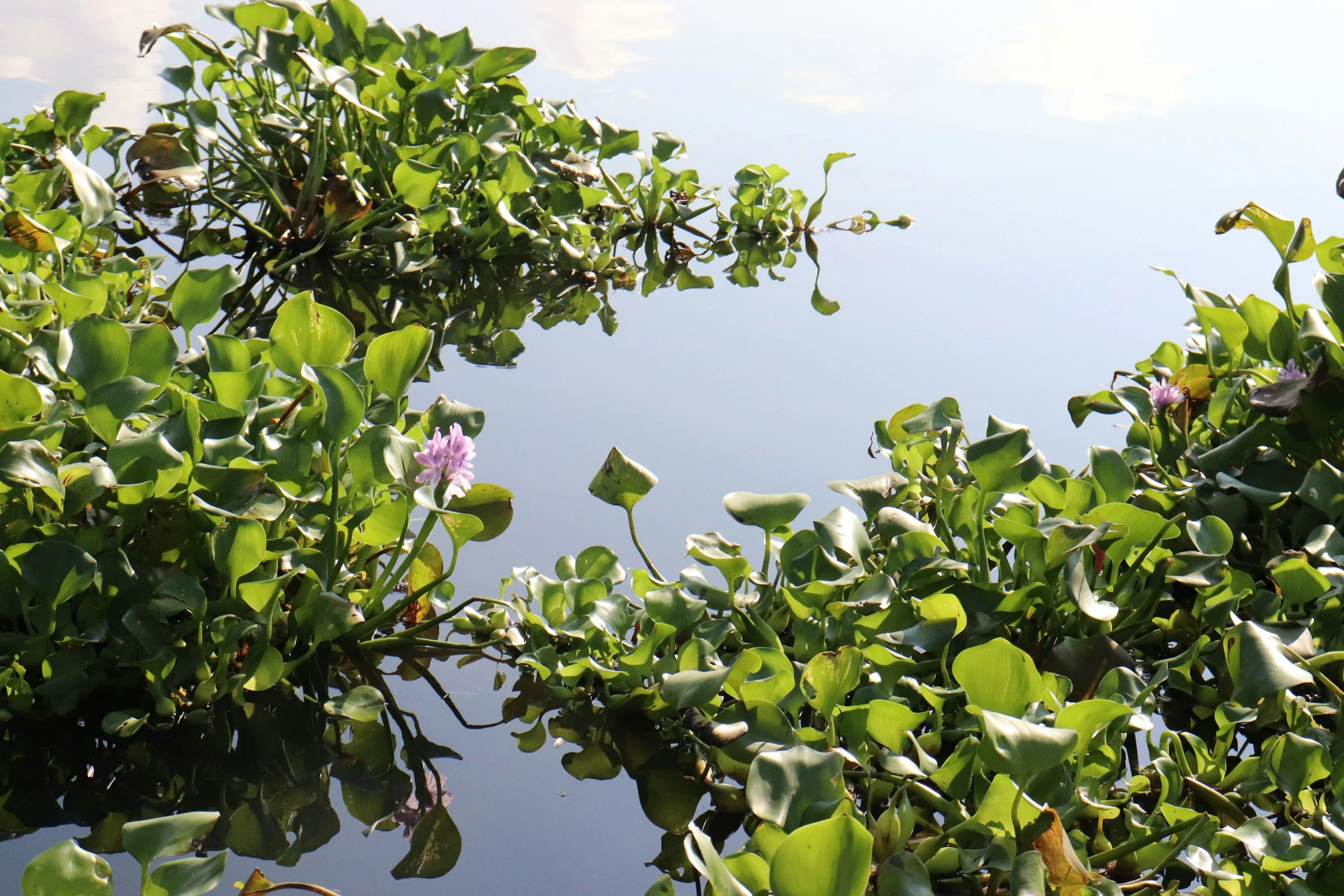
Water hyacinth earns the top spot on this list for good reason. The California Invasive Plant Council gives it a "High" rating — their most severe classification — reflecting severe ecological impacts and high rates of dispersal and establishment.
Originally introduced to the United States from South America as an ornamental plant in 1884, water hyacinth is now described by the USDA as one of the world's most aggressive aquatic weeds. In California, it's particularly established in the Sacramento-San Joaquin Delta and Central Valley waterways, where it has been actively managed — and still spreading — for over a century.
Why It's So Difficult to Control
Water hyacinth grows at a rate that is almost impossible to believe: under ideal warm-water conditions, a mat of water hyacinth can double in size in as little as two weeks. It spreads through stolons that produce daughter plants, through fragmentation, and through seeds that can remain viable in sediment for more than 5 years. Every piece of the plant that breaks off is a potential new infestation — which means careless manual removal or cutting can actually accelerate its spread.
Dense floating mats can weigh up to 200 tons per acre and can block light from the water column below, suffocating submerged native plants, depleting oxygen for fish, and creating ideal mosquito breeding habitat.
How to Remove It
Mechanical harvesting using specialized aquatic harvest vessels is the most effective large-scale removal method for established infestations. California State Parks' Division of Boating and Waterways uses mechanical harvesting in the Delta specifically for water hyacinth in heavily infested areas. The key is complete biomass removal — cut fragments left floating will re-root and restart the infestation.
Herbicide application with approved aquatic herbicides like Rodeo or Habitat, applied by a licensed professional, can provide effective control but requires careful timing relative to fish surveys, water use restrictions, and regulatory conditions.
For smaller, newly discovered infestations, hand removal — carefully bagging entire plants including all roots and fragments — can prevent establishment. Never compost water hyacinth; bag and dispose of it in municipal waste.
2. Eurasian Watermilfoil (Myriophyllum spicatum)
Threat Level: Very High | Status: Most widespread submerged invasive in California
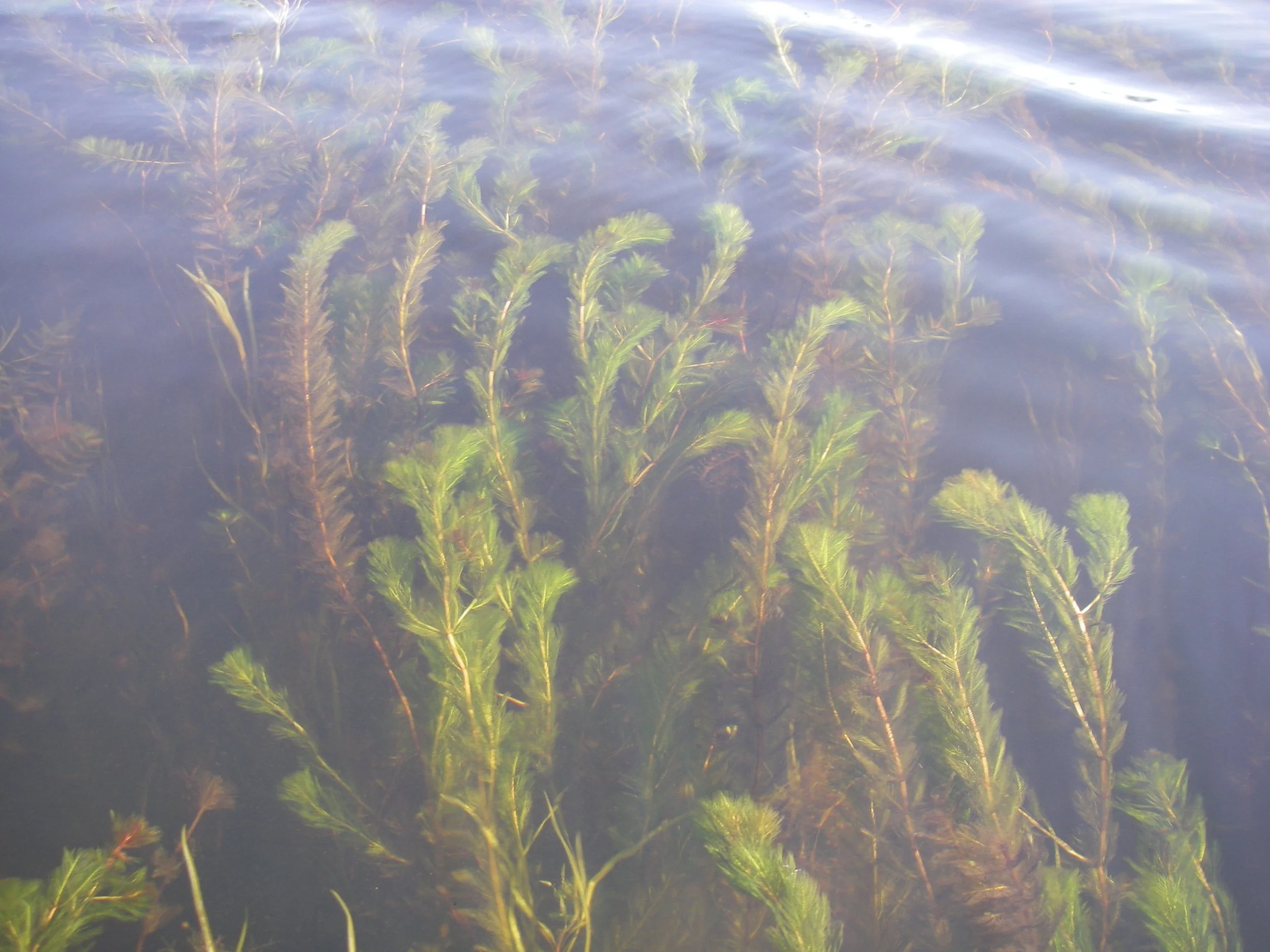
Eurasian watermilfoil holds a grim distinction: it's the most widespread submerged invasive aquatic plant in California, and it's a serious ongoing problem at Lake Tahoe and numerous other mountain and foothill lakes throughout the state.
Introduced from Europe and Asia (likely through the aquarium trade), Eurasian watermilfoil has colonized lakes across North America. In California, it finds excellent conditions in the clear, nutrient-rich waters that characterize many of the state's prized recreational lakes.
Why It's So Difficult to Control
Eurasian watermilfoil is the definition of a fragmentation spreader. Its stems are brittle and break easily — and each fragment can float downstream or be carried on a boat hull, trailer, or wading gear to start a new infestation in another lake. Waterfowl that feed in infested areas carry fragments on their feathers and feet between water bodies.
Once established, watermilfoil forms dense underwater canopies that shade out native submerged plants, alter the fish habitat structure, and dramatically reduce the recreational quality of a lake. It grows to the water surface and spreads horizontally across open water, creating impenetrable mats by late summer.
How to Remove It
Mechanical harvesting with depth-controlled cutting equipment can clear infested areas and restore navigable channels, but the fragmentation risk means it must be done carefully with fragment-containment measures. Harvesting is most effective for creating and maintaining access corridors rather than complete eradication.
Herbicide treatments using fluridone (a systemic aquatic herbicide) applied in early spring before peak growth can provide season-long control with minimal fragmentation risk. This requires proper permits and a licensed applicator.
Prevention is critical. Because Eurasian watermilfoil spreads primarily via watercraft, the "Clean, Drain, Dry" campaign — inspecting and decontaminating boats, trailers, and equipment between water bodies — is the most important tool for preventing new infestations.
3. Egeria / Brazilian Waterweed (Egeria densa)
Threat Level: High | Status: Widespread in Central Valley and Delta
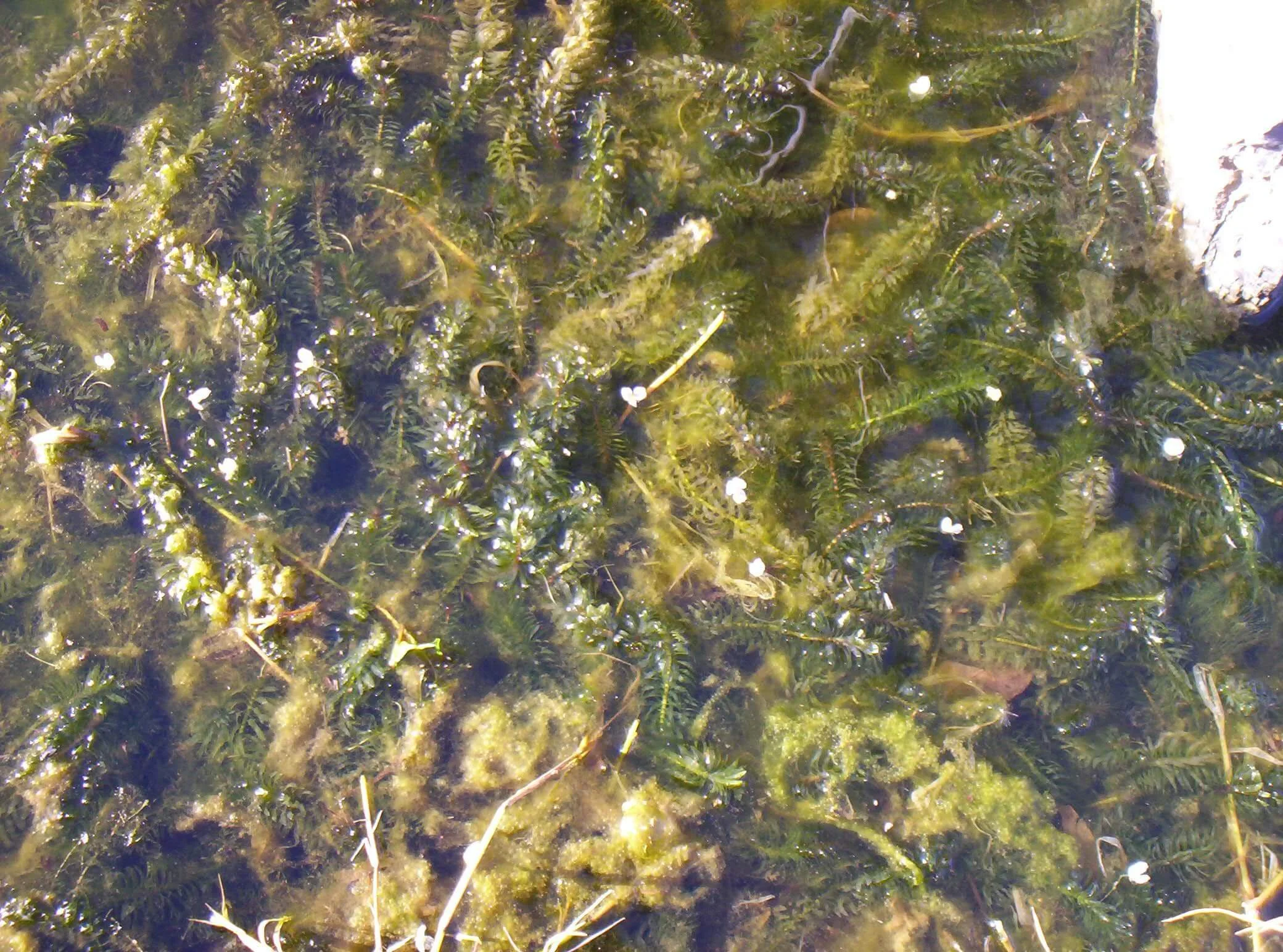
Egeria densa — often called Brazilian waterweed or Egeria — is a submerged aquatic plant native to South America that has become deeply entrenched in California's Sacramento-San Joaquin Delta and Central Valley waterways. Originally introduced through the aquarium trade, it has spread to irrigation channels, rivers, lakes, and reservoirs throughout lower-elevation California.
Why It's So Difficult to Control
Like watermilfoil, Egeria spreads primarily by fragmentation. The California Division of Boating and Waterways (DBW) explicitly notes that for submerged plants like Egeria, mechanical cutting is not recommended as a standalone control, because cutting the plant causes shreds to float away and re-propagate throughout the water body.
Egeria forms dense underwater mats that impede water flow in irrigation channels — costing water districts millions of dollars annually in pumping and maintenance costs — and reduces light penetration and oxygen for native aquatic life. In the Delta, it's one of the primary target species in the state's annual Aquatic Invasive Plant Control Program.
How to Remove It
For Egeria, herbicide treatment using fluridone is the primary management tool employed by state and local agencies. The challenge is that fluridone requires extended contact time (weeks to months) and low water exchange conditions to be effective — conditions that aren't always achievable in moving water systems.
For lake systems with Egeria infestations, a combination of carefully managed herbicide treatment and follow-up mechanical removal of dead material (which still poses fragmentation risk) provides the best outcomes. Professional management is strongly advised.
4. Giant Salvinia (Salvinia molesta)
Threat Level: Very High | Status: Emerging threat in California water bodies
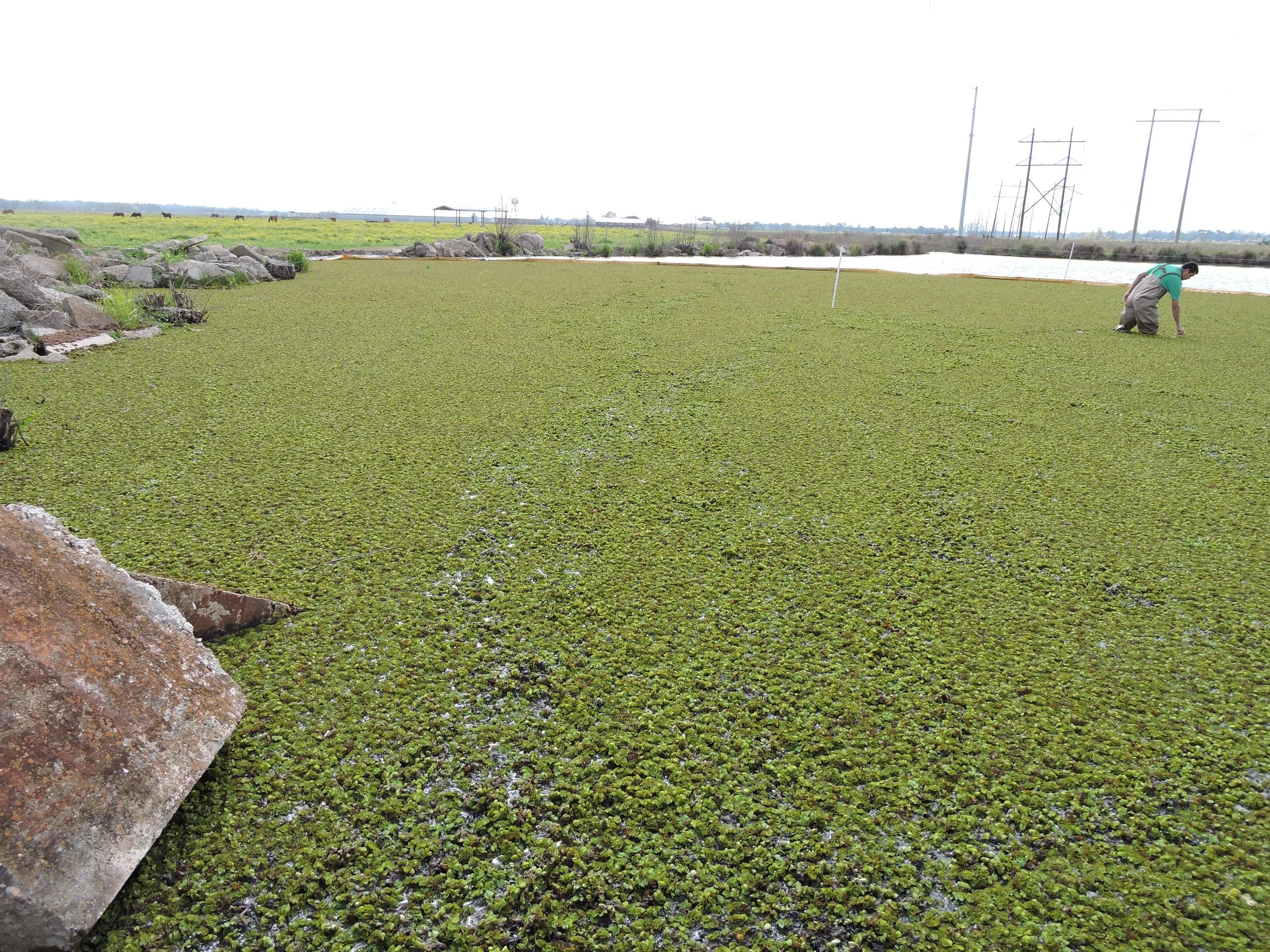
Giant salvinia is a free-floating fern native to South America that arrived in California primarily through the aquarium and water garden trade. Introduced to California via ornamental trade, it poses a serious threat to lakes, ponds, and rivers where it can completely cover water surfaces, creating stagnant conditions in what were once healthy, flowing waterways.
Why It's So Difficult to Control
Giant salvinia is one of the fastest-growing aquatic plants known to science and can double in area in as little as a few days under optimal conditions. It doesn't root — it floats entirely on the surface in interconnected mats. The dense mats block light, deplete oxygen, and turn open water into what ecologists describe as a biologically dead zone.
In warmer California climates, giant salvinia can thrive year-round, unlike in colder regions where winter temperatures provide some natural suppression. It's illegal to possess or sell giant salvinia in California, yet it continues to appear in water bodies — usually from illegal aquarium dumps.
How to Remove It
Mechanical harvesting and removal is the primary tool for giant salvinia control. Unlike fragmentation-prone submerged plants, floating mats of giant salvinia can be physically corralled and removed. Speed matters enormously — early removal of small infestations is dramatically easier than managing an established colony.
In Texas (which Aquatic Harvesting also serves), giant salvinia has been a major problem in East Texas lakes for years, providing valuable lessons in the kind of sustained mechanical removal program required to manage this species.
Herbicide options are limited and results are mixed. Biological control using the salvinia weevil (Cyrtobagous salviniae) has shown promise in research settings but requires specific conditions.
5. Water Primrose (Ludwigia hexapetala)
Threat Level: High | Status: Spreading rapidly in Central Valley and Bay Area waterways
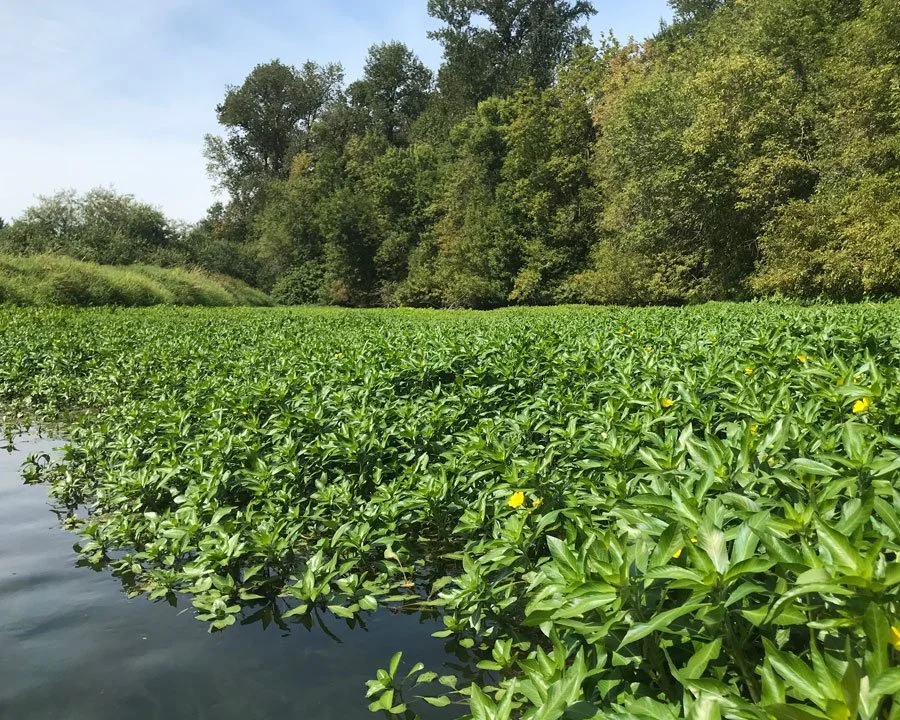
Uruguay water primrose is a relative newcomer to California's invasive plant problem, but it's rapidly establishing itself as a serious management challenge. This emergent aquatic plant — native to South America — has spread through the Sacramento-San Joaquin Delta and Bay Area waterways at alarming rates, and its bright yellow flowers can be deceptively attractive to the untrained eye.
It is one of the primary target species in the California Division of Boating and Waterways' annual Floating Aquatic Vegetation Control Program, alongside water hyacinth and South American spongeplant.
Why It's So Difficult to Control
Uruguay water primrose grows from both seeds and stem fragments, can root in moist soil or float in open water, and forms dense mats that slow water movement — creating standing water ideal for mosquito larvae. It grows aggressively in disturbed areas and rapidly colonizes the edges of irrigation channels, lake margins, and tidal sloughs.
Unlike purely floating plants, its rooting ability in saturated soils means it can establish along shorelines and banks in ways that purely aquatic invasives cannot — expanding its potential range considerably.
How to Remove It
The California DBW uses a combination of herbicide application (targeting early in the growth season) and mechanical removal for established Uruguay water primrose colonies. Like water hyacinth, complete biomass removal is critical — fragments left in the water can re-root and restart an infestation.
For private lakes and managed water bodies, early detection and rapid manual or mechanical removal of new plants before they establish is the most cost-effective approach. Once Uruguay water primrose establishes a dense mat, removal becomes exponentially more difficult and expensive.
Prevention: The Cheapest Form of Control
For all five of these invasive species, prevention costs a fraction of what removal costs. The most important prevention practices for California lake users and managers are:
Clean, Drain, Dry: Inspect and decontaminate all boats, trailers, waders, and equipment between water bodies. Many invasive plants spread as tiny fragments caught in propellers, trailers, and gear.
Never dump aquarium or water garden plants into natural water bodies. Giant salvinia, water hyacinth, and Egeria have all established in California primarily through irresponsible aquarium or water garden disposal.
Report new sightings immediately. The California Division of Boating and Waterways maintains a hotline for reporting new aquatic invasive plant sightings: (888) 326-2822. Early detection allows rapid response before a species establishes.
Work with a professional lake manager to monitor your water body regularly for signs of new invasive plant introductions. The cost of early intervention is a tiny fraction of full-scale remediation.
Professional Invasive Plant Removal in California
Aquatic Harvesting specializes in the mechanical removal of invasive aquatic plants throughout California, including water hyacinth, watermilfoil, Egeria, and other challenging species. We serve municipalities, HOAs, private landowners, corporate campuses, and golf courses throughout the western United States.
Our fleet of professional aquatic harvest boats, including our Aquatic Vegetation Cutter (AVC), is equipped to handle the most demanding removal projects — with complete biomass removal to prevent nutrient recycling and re-establishment.
